
We Met Him Where He Was
He caught our eye the moment we walked into the classroom. Right after we asked the class to pull their chairs in closer, one boy picked up his chair and walked it straight to the back corner of the room without saying a word.
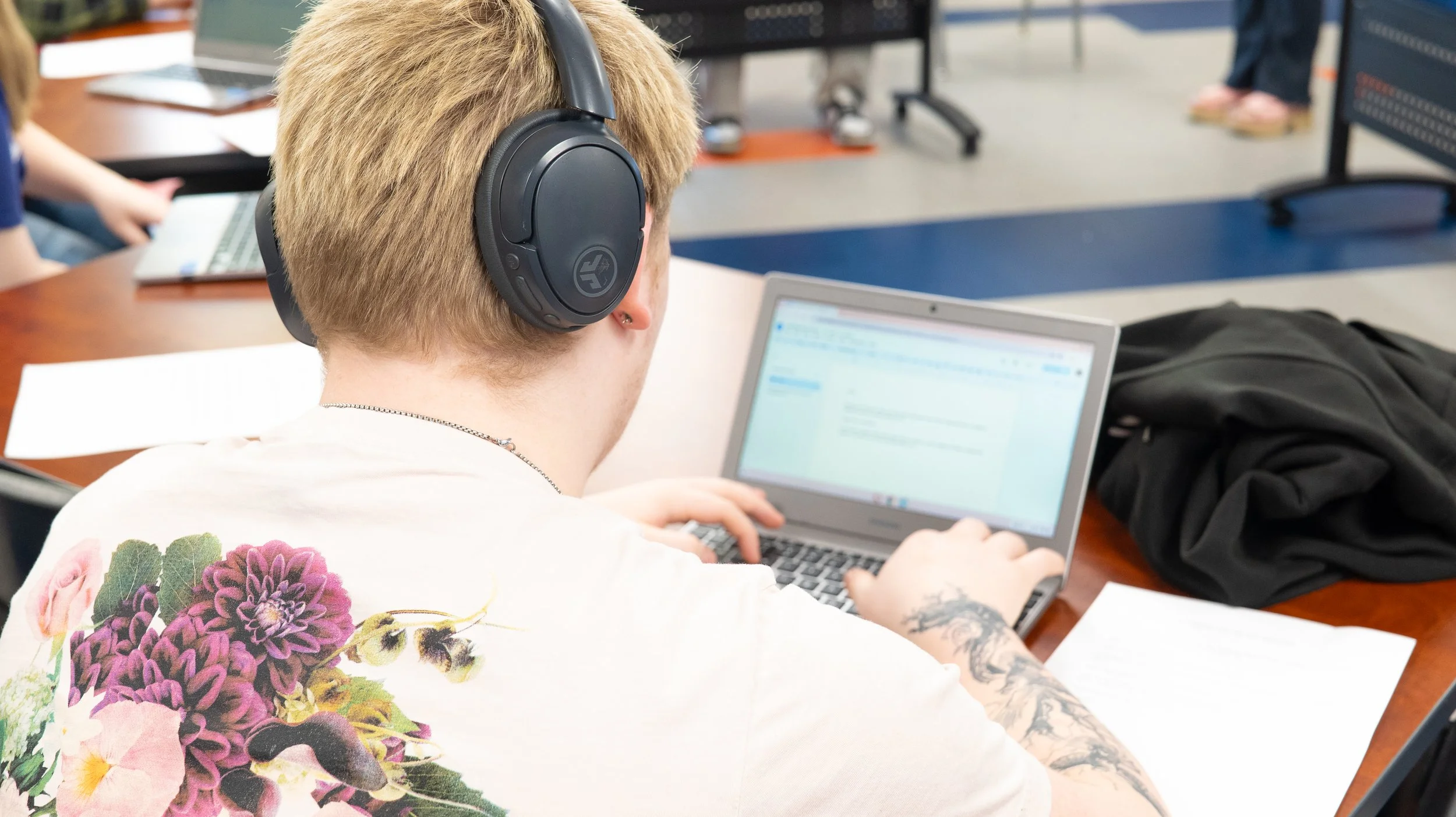
Naturally, the internal questions started spinning. Was he trying to push buttons? Was he feeling sick? Did he just need space? As educators, our instinct is to diagnose a problem immediately so we can fix it, but the truth was simpler: we had no clue what was going on.
We tried to put those questions aside as we launched our first STEM Playbook session at River Gate Academy in Warren.
For the most part, the room was electric. Jessie Dann, our Director of Engagement, was doing what she does best, getting students up, moving, laughing, and working together. Almost everyone was locked in.
Almost.
The boy in the back corner hadn't moved an inch. No expression, no participation. It’s hard not to take that personally or worry that you're failing a student when you see that kind of wall up.
By the end of the day, the session felt like a massive success on paper. The kids loved the activities and were genuinely connecting with each other. Yet, driving home, we couldn't stop thinking about the boy in the corner. We hoped that maybe by week two or three, he’d start to thaw.
But over the next month, nothing changed. He remained alone. Still silent. Still sitting in the back.
The rest of the program at River Gate was thriving. Students were suddenly talking about future careers, discovering how STEM ties into the sports they love, and showing a real spark for learning. But he remained an island in the back of the room.
Then, we finally got a breakthrough. We found out he was obsessed with cars - specifically, cars AND the technology inside them.
That gave us an opening. We invited a colleague who runs a successful automotive technology business to come in as a guest speaker.
That morning, the boy who had spent weeks trying to disappear into the drywall did something completely unexpected: he walked right up to the front row. For the first time all semester, his hand went up. He asked questions, leaned forward, and completely drove the conversation.
It was a powerful reminder for our team. We didn't change him. We didn't convince him. We listened and then found something that connected to who he already was.
When a student disconnects, it’s easy to assume they lack motivation or interest. But usually, we just haven't figured out what lights them up yet.
True engagement isn't about demanding that students meet us where we are. Sometimes it begins with having the patience to go meet them where they already are.
We call that a win.
