
From the Pocket to the Flight Deck: Josh Dobbs Is Just Getting Started
Josh Dobbs, a back-up quarterback for the Detroit Lions, has spent a decade in the NFL learning how to turn pressure into opportunity.
Now in his tenth pro season, the quarterback — who has suited up for 10 different professional teams since being drafted by the Pittsburgh Steelers at 22 — has built a career on being ready when the moment calls, whether that means starting on two days' notice or taking the pilot’s seat for the first time.
Along the way, he's picked up a private pilot's license, an instrument rating, and a reputation as one of the more curious, STEM-minded athletes in professional football.
That reputation extends well beyond the flight deck. Dobbs trains in Cirrus's SR Series — a sleek, single-engine aircraft with touchscreen avionics and a whole-airframe parachute built right into the design. “They make really cool airplanes — the colors are gorgeous, they have touchscreens, they look futuristic,” he said. But for Dobbs, the technology he's most excited about isn't the one you can see. Automation, he believes, is personal aviation's next real breakthrough — the kind that can already fly a plane to safety on its own, and that he thinks will keep putting more people in the pilot's seat of their own lives, quite literally flying themselves to wherever they need to be.
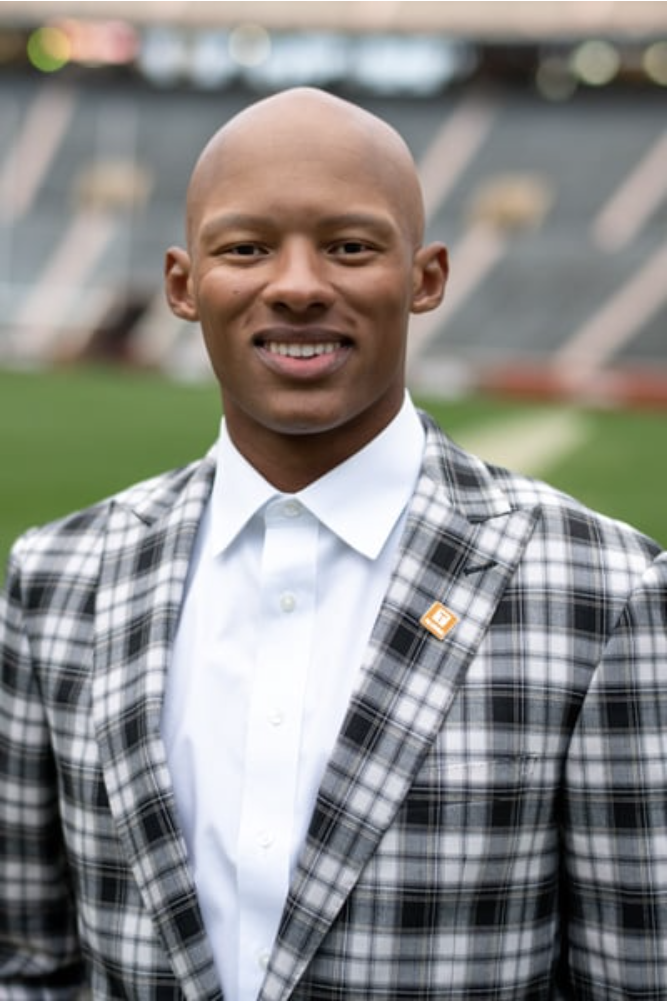
Photo Credit: The University of Tennessee
It's a story STEM Playbook, the sports-based STEM education company, and STEM Magazine wanted to tell — not because Dobbs made it to the NFL, but because of everything that happened before and around that fact, and what it can teach the next generation of kids who won't.
Built for Curiosity, on Purpose
Dobbs grew up an only child in Alpharetta, Ga., just north of Atlanta. His parents, both from small towns in Mississippi, made a deliberate choice: whatever opportunities they hadn't had growing up, their son would.
“They gave me the things that weren't provided to them,” Dobbs said. That meant football, baseball, and basketball starting at age 5 — and, just as importantly, chorus, band, and chess club. If the elementary school offered it, his parents signed him up.
The Case for Doing It All
That range wasn't incidental. Dobbs credits it with teaching him, early, what he loved and what he didn't — and with building the kind of nervous-system versatility that, he argues, too many young athletes miss today by specializing too soon.
“Doing multiple sports at a young age trains your nervous system to improve quicker, because you're putting it in different environments where it has to grow to succeed,” he said. “If I could give any advice to the next generation of athletes, it's to play as many sports as you can, for as long as you can. Specialization will come when you prove you're good enough at one. Until then, playing multiple sports only sets you up for more success down the road.”
The same logic explains why Dobbs pursued math, science, and engineering alongside football: he liked competition and he liked problem-solving, and both showed up in the classroom and on the field alike. That curiosity, though, didn't always pay off right away.
The Lesson That Stuck
In third grade, Dobbs's chorus duet partner didn't show up — leaving Dobbs to sing the part solo, in front of his classmates, and discover in real time that he could not sing in tune.
“It might not seem like a failure, but it felt like one at the time. It still kind of scars me,” he said, laughing. “But I learned the power of confidence — and the power of knowing you're not good at everything.”
That lesson, he says, mattered more as his career advanced and the stakes, and the audiences, grew. “As the nature of your career path gets bigger — playing at the highest levels, in high school, college, the NFL — those failures get more accentuated, because now they happen with a lot of eyeballs watching, on the biggest stages in sport. It's about how you respond, how you pick yourself back up, and how you use it to make the next opportunity better.”
A Coach Who Held Him Accountable
At the University of Tennessee, where Dobbs became the starting quarterback, that resilience was shaped further by his quarterbacks coach, Coach Sheridan — now the offensive coordinator at Michigan State.
“Nowadays, when people look for a mentor, it's often someone who just appeases their feelings — who lets you do whatever makes you feel good,” Dobbs said. “What Coach Sheridan did was uplift me when I needed it, but also held me accountable — my footwork, my reads, being consistent in practice so I could be consistent in games. And even more than that, he held me accountable to being a great student, and to being a good person in the community. Having someone like that in your life, at an impressionable age, is incredibly powerful.”
Dobbs, who graduated with a 4.0 grade point average, holds a degree in aerospace engineering.
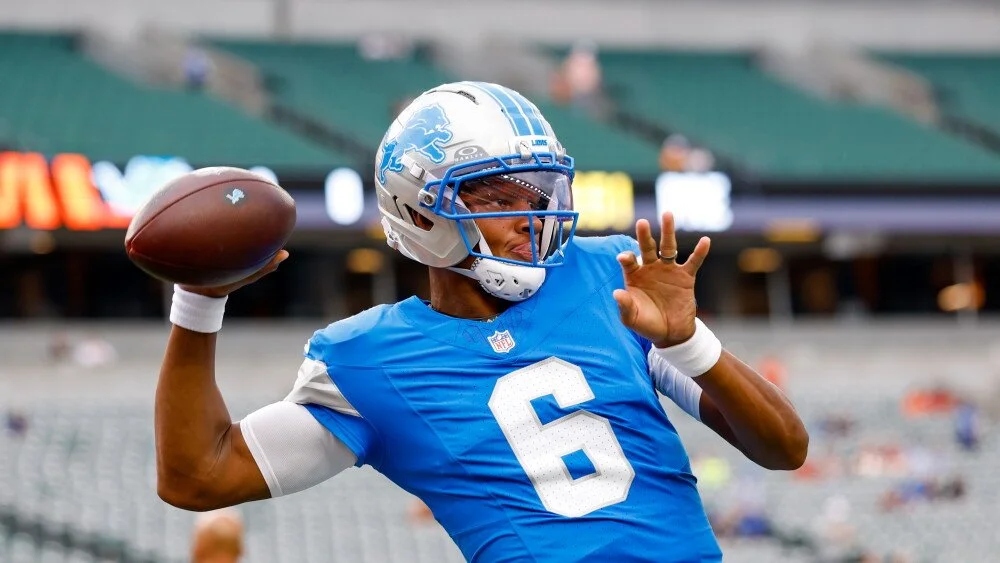
Photo Credit: NBC Sports
Ten Teams, One Approach
That same accountability followed Dobbs into the pros, where his path has been anything but a straight line. Drafted by Pittsburgh, he spent five seasons behind Hall of Fame quarterback Ben Roethlisberger — learning plenty, but rarely playing.
“You put in all that work to become a professional athlete, and you're mostly just watching,” he said. So he changed his own math: rather than wait for a full offseason with one team to “learn the playbook the right way,” he decided he'd take whatever chance to play he could get — even a start on two days' notice. That approach carried him through stops with multiple franchises, including the San Francisco 49ers and a run with the Cleveland Browns, before this, his tenth season.
A Plan Beyond the Pocket
STEM Playbook was built around a blunt statistic: fewer than one-tenth of one percent of kids who dream of going pro ever will. Dobbs's own career makes the case that even making it doesn't mean the planning stops.
Even in Pittsburgh, sitting behind a Hall of Famer with little chance to play, Dobbs was already thinking about what came after football — and treating his off days as an investment in it. “If you want to learn about an industry, especially enough to want to dive into it after playing, you have to find unique ways to learn about it while you're still playing,” he said. He tried the more traditional path first, picking up a couple of short externships along the way, but found them too brief to build any real momentum in an industry.
Flying changed that. “It's been very unique becoming a pilot, because I've learned so much about aviation — not just flying the airplane, but how the industry works, the different facets you can get into. And the connections I've made have been amazing.”
Playing the Long Game
That same deliberateness shapes how he thinks about the rest of his career. “My goal growing up was always to play 10 years — this is my 10th season,” Dobbs said. “Now it's about taking it year by year, staying healthy, and bowing out when the time is right, while still doing the things I want to do off the field. I do know there are things I want to accomplish off the field, so I won't be the guy out here playing for 20 years. But for now, we're enjoying the opportunity to play, and doing cool things off the field at the same time.”
For Dobbs, aviation isn't just a hobby to fall back on if football ends — it's a runway into whatever comes next. “My ultimate goal is to have my own plane, and be able to fly — share my story more, especially with kids or other people who want to get into personal aviation,” he said. “And as I get into the business world, be able to fly myself to opportunities.”
Learning to Fly, on Off Days
One of those things: becoming a pilot. Dobbs had loved aviation since childhood — the kid who wanted to know the make of every plane at the airport, where it was headed, and how it worked — but it took a deliberate push, two years ago while playing for the San Francisco 49ers, to act on it.
“At some point, if you say you want to do something, you have to hold yourself accountable,” he said. He joined JATO, a flight school in the Bay Area that trains pilots in Cirrus aircraft, and built lessons around Mondays and Tuesdays — the lightest days of an NFL week. He earned his private pilot certificate that December, about seven months after his first lesson, flying once or twice a week around his football schedule. This spring, he added an instrument rating in about two months, bringing his total training time to roughly nine months.
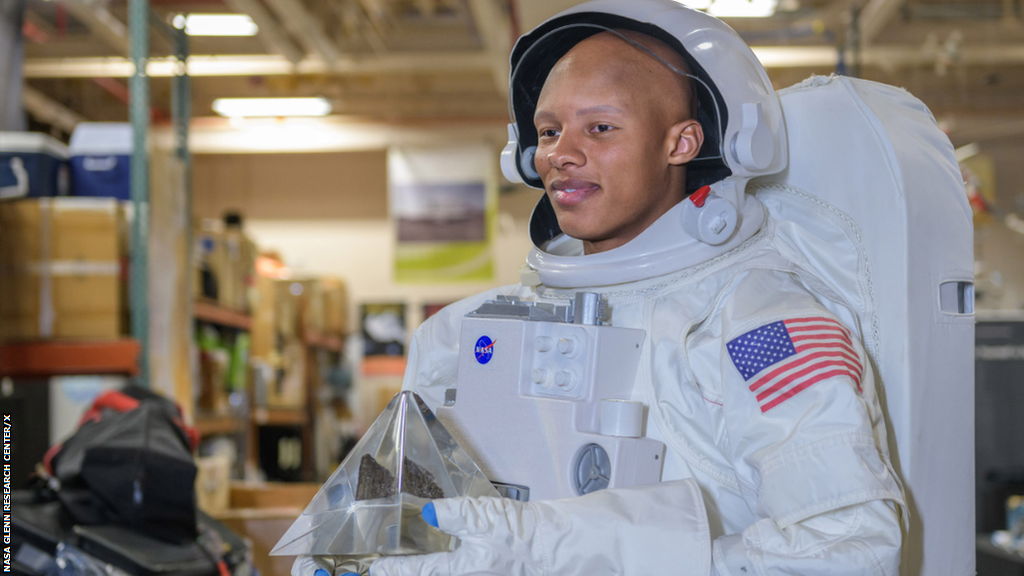
Photo Credit: BBC and NASA Glenn Research Center
Outside the Comfort Zone
Dobbs describes the jump from loving aviation to actually flying as one of the sharpest “outside your comfort zone” moments of his life. “It's one thing to have an interest in flying, and another to actually sit in the left seat of a single-engine plane you've never sat in before, and learn how to take off and land,” he said. “Learning to do that consistently, with confidence, takes a lot of trial and error — some failure, and then, finally, that reward of doing it.”
Built Around Safety
The aircraft themselves were part of what made the leap feel possible. Dobbs trained in a Cirrus's SR Series, a single-engine aircraft built around a suite of safety systems — most notably the Cirrus Airframe Parachute System (CAPS), a whole-airframe parachute, and Safe Return Emergency Autoland, a feature that can safely land the plane at a nearby airport even if the pilot can't: from 400 feet or higher, it can fly an approach into the nearest suitable airport and land the aircraft on its own. “No matter where you go, people know what that airplane is,” Dobbs said. “They understand the safety features — the CAPS, the Safe Return. They understand the power of general and personal aviation.”
That safety record did more than build Dobbs's own confidence — it built his family's. His father and his now-wife, who was still his girlfriend at the time, each joined him for a few of his training lessons in California. “Being able to tell them I'm training to become a pilot in the SR Series definitely gave them a breath of confidence,” he said, “because explaining the safety features — the parachute system attached to the airframe, now the Safe Return feature — gave them confidence not just for me to go fly by myself, but for them to come with me, too.”
Dobbs doesn't own a plane yet — that's still the goal — but he's already thinking about where the industry is headed next. “Adding automation to aviation is something that's very interesting,” he said. “Look at the Cirrus — a single-engine airplane that, in the past, has gotten a bad rep, and it's the safest plane in the world.” He sees that same shift — more people flying themselves, more control over their own time — as the next frontier of personal aviation, and one more way, eventually, to share his story with kids who've never considered it for themselves.
It's a shift Dobbs is already watching play out. “It's amazing to see the growth of personal aviation — more people getting into it, taking the onus on themselves to fly wherever they're going, having control of their own time and freedom,” he said. “Now, with commercial aviation prices, if you have the means to have your own plane, it can come out to less, on a per-trip basis, than booking a flight. So the access you have through personal aviation is beautiful, and watching that industry grow has been amazing.”
Be Yourself
It's a story of curiosity and accountability that, for Dobbs, adds up to a simple piece of advice. Ask him what he'd tell a kid who wants to be the next Josh Dobbs, and he redirects the question without hesitating.
“Honestly, don't be the next Josh Dobbs — just be yourself,” he said. “I'm here today because I was myself, in times when people didn't want me to be, and in times when people loved the things that make me who I am. There's always two sides to that coin. But I've always just tried to be myself, do what I love on a daily basis, and put my best foot forward every single day.”
“That's my biggest piece of advice for any student: be yourself, and do whatever it takes to put your best foot forward every day,” he said. “That might not always be 100 percent, and it won't always work out. But when it doesn't, that's a learning opportunity to grow — there's always another chance to pick yourself up, go back out there, and put your best foot forward again.”
It's advice he sees as especially suited to this moment. “Right now is a really unique time,” Dobbs said. “If you're confident in yourself, in your own ability, and in the things you're interested in, you can make a great living for yourself and create really unique opportunities. If you're willing to do that, you'll have a lot of fun living.”
Paying It Forward
That instinct — to open a door for the next person, the way flying opened one for him — extends beyond the flight deck. Off the field, Dobbs founded the ASTROrdinary Dobbs Foundation to inspire and empower the next generation through education, mentorship, and meaningful exposure to STEM and aviation. The foundation has provided students with immersive experiences at NASA's Kennedy Space Center, the U.S. Space & Rocket Center, and other leading aerospace organizations — helping young people see that careers in science, engineering, aviation, and space are within their reach.
It's the same message he brings to STEM Playbook: the odds of going pro are vanishingly small, but the habits that got him there — curiosity, discipline, and a genuine plan for what comes next — are available to any kid willing to build them.
